The Cost Question Owners Ask
When owners consider construction management at-risk (CMAR) delivery, one concern tends to come up early: Doesn’t CMAR cost more?
It is a fair question. CMAR does require an up-front investment in preconstruction services and early contractor involvement. But that framing misses the bigger picture. The real question is whether that early investment helps owners avoid larger costs, delays, and risk later. In my experience, the answer is yes.
When CMAR is done right, owners gain a partner who helps shape the project before the most important decisions are locked in. That includes constructability reviews, value engineering, risk analysis, schedule development, procurement planning, and real-time cost feedback while design is still evolving.
Too often, a project can look efficient on paper but becomes more difficult and expensive once crews are in the field. Engineers bring design expertise, while contractors bring experience with how work is built, sequenced, procured, and performed safely. Under CMAR, owners get both perspectives during design, when the team still has time to make smart changes. That early collaboration is what turns CMAR into a cost-saving strategy.
Sister Grove Demonstrates the Value of Early Contractor Involvement
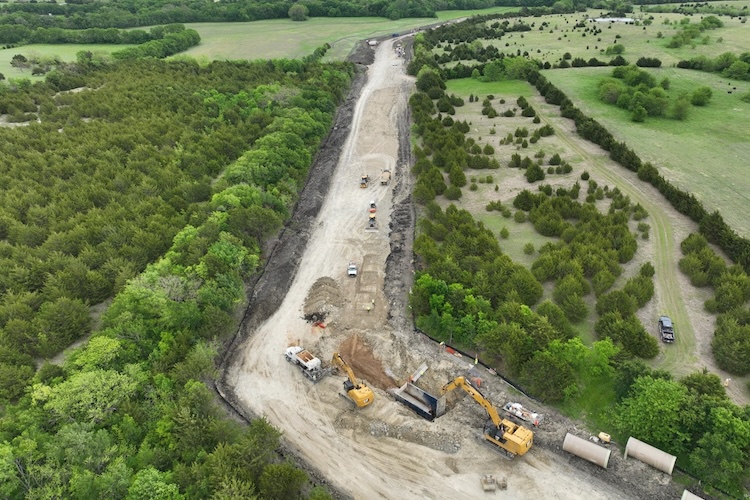
The Sister Grove outfall project in McKinney, Texas, is a strong example of CMAR in action. The project involved an almost four-mile, $66 million gravity pipeline through rocky terrain, with excavations reaching depths of up to 60 feet. It was a technically demanding job, and Garney’s involvement during early design created opportunities to improve both cost and constructability before digging began.
During preconstruction, we worked with the engineer and owner, North Texas Municipal Water District (NTMWD), to determine where trenchless installation was the best fit based on the depth of cover over the pipeline. The team also evaluated whether one 96-inch-diameter line or two 78-inch-diameter pipelines would be more economical, while accounting for how that choice could shape future work in the area. These are the kinds of decisions that can have a major impact on long-term project value, and they are easier to make when the contractor is involved early enough to help inform the design.
The team also identified an opportunity to revise the tunnel alignment by incorporating two large-radius bends. That change eliminated the need for more access structures and tunnel shafts, saving the owner about $2.2 million.
Garney reviewed the original bedding and trench details and identified sections of solid rock excavation where flowable fill could be replaced with crushed aggregate. Because the aggregate would provide consistent support for the fiberglass pipe, the change maintained performance while lowering cost. That adjustment saved NTMWD roughly $2.1 million.
These savings, totaling $4.3 million, delivered a strong return on the owner’s initial preconstruction investment. We see similar results on nearly every CMAR project, where early collaboration helps teams identify better, more cost-effective solutions before construction begins. Value engineering is not about reducing scope. It is about finding smarter solutions that deliver the same result at a lower cost.
Early Procurement and Risk Reduction
Sister Grove also demonstrated the procurement advantage CMAR can offer. When supply chain disruptions affected the industry, early involvement allowed us to procure materials sooner, helping the owner lock in pricing and reduce the risk of delays. That kind of proactive planning is difficult to achieve under more traditional delivery methods, where the contractor is not brought on until much later.
Added Support for Owners
CMAR also helps owners in a less visible but equally important way: It reduces the burden on their internal teams.
A strong CMAR team manages subcontractor coordination, quality control systems, procurement tracking, budgetary and other financial controls, and schedule execution. That can reduce the need for the owner to build out a larger in-house management effort to drive the process themselves.
Looking at the Full Value of CMAR
For owners evaluating delivery options, the lowest apparent up-front cost does not always produce the best overall outcome. CMAR creates opportunities to make better decisions earlier, reduce avoidable risk, improve coordination, and uncover savings that may never be available once design is complete and construction is underway. When viewed through that broader lens, the value of CMAR is in what it helps owners avoid and achieve over the life of the project.