As-built conditions of older water and water reclamation facilities rarely match their record drawings. Underground pipe and process equipment often differ from original plans because they are underground or the exact model of equipment installed was not modeled. The vast majority have a maze of utilities that are likely not to appear accurately on plans because of upgrades or expansions that occurred over the years, creating a complex network that is difficult to track. Owners know new upgrades and expansions become even more challenging and costly when this information is outdated, leading to the risk of construction delays, unexpected costs, potential plant disruptions, or worse. Initiating further upgrades without an accurate understanding of a plant’s existing conditions risks incurring substantial setbacks, added costs, and avoidable disruptions.
Collaborative delivery models establish a well-informed process for managing complex infrastructure upgrades and expansions. These delivery models enable all stakeholders to collaboratively evaluate and understand the intricate systems within a facility and to develop an effective project strategy before construction begins, ensuring the team meets project objectives and efficiently addresses and meets the community’s needs.
Virtual design and construction (VDC) is an important aspect of the process, leveraging various building information modeling (BIM) tools that strengthen the approach by replacing assumptions with real, verifiable information. Instead of guessing about what lies beneath a concrete slab or inside a process gallery, the team builds a digital representation of the facility and uses it to guide design and construction. McCarthy Building Companies’ National Water Services team employs a robust VDC toolbox with various VDC procedures and BIM tools, such as VDC project setup and kickoffs, reality capture plan, Revitzo, virtual execution plan (VxP), closeout and deliverables turnover procedure, subsurface utility exploration/mapping capabilities, laser scanning, drones, and model coordination, just to name a few. These tools provide detailed information that is used to establish a base model with existing as-builts, which McCarthy experts then update by interpreting actual as-built data collected by the VDC / BIM tools and with site visits. Ultimately, the owner is provided a consolidated accurate model and drawings that are reliable for the current build-out and all future build-outs.
A Unified Approach
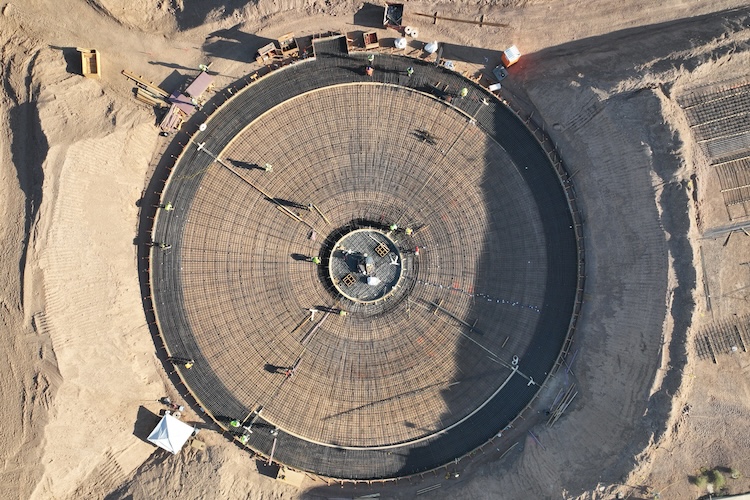
Through an extensive and aligned VDC strategy during planning, design, coordination, and throughout construction of the expansion at the Kurt R. Segler Water Reclamation Facility (KRSWRF) in Henderson, Nevada, the team obtained important insights that led to the facility’s successful expansion.
A critical part of the region’s reclaimed water system, KRSWRF was being expanded to increase capacity and add redundancy with the long-term goal of managing public impact and costs as well as providing the owner with a detailed updated plant map. To achieve this, the improvements required new structures, piping, and tie-ins within a tight operating site. And, with so much activity happening around ongoing operations, the city needed a plan grounded in accurate information rather than legacy drawings or partial field notes.
For this project, there was an emphasis on early collaboration, which was a key factor in its success. The team, which included McCarthy and Jacobs with the owner, strived to ensure that the most accurate information was integrated into the design and used for planning purposes. At the start of the conceptual design phase, a strategy was developed to get everyone involved on the same page. This allowed the team to verify the as-built condition of major risk areas and tie-in locations as well as document the interaction of the proposed infrastructure.
To make this happen, the team employed layering mapping, drone flights, laser scanning, and field verification data in combination with collaborative analysis tools. By doing this, it allowed the team to create an exact model that was up to date. It used appreciably less labor than potholing to ensure subsequent design changes and modifications, and plans for tie-ins to existing facilities were based on accurate information. Ultimately, the strategy reduced the risk of utility strikes and design changes in the field.
The primary tool the team relied on was Revitzo. This platform uses gaming technology, which makes it very user friendly, and cloud solutions to provide 3D and 2D workflows along with one place for team members to work with real-time coordination, communication, and tracking issues. Revitzo also incorporates laser scans, BIM models, civil 3D models, and topography in one model, allowing for everything to be seen together. It was particularly useful for the KRSWRF project because it allowed for 2D models—which were all the versions created on this project over the years—to be overlaid with the 3D model, providing the detail of the 2D with the understanding of the 3D. Because of this, the team was able to conduct quality check changes as the design phase was completing, something that proved crucial for this project’s success.
Clarity on Scope, Cost, and Risk
Rehabilitation and expansion projects are notorious for scope uncertainty. VDC helped the team reduce that uncertainty by revealing what truly needed to be addressed and what risks were present. Through rigorous planning and use of VDC, a clear understanding of the work associated with conflicts, protection of existing assets, and required shutdown windows were gained by the KRSWRF team.
This clarity directly supported budget control. With better information, the team could quantify impacts realistically rather than carrying broad contingencies. The tools helped clearly define the true scope and related construction costs associated with the project, allowing for the project budget to be maintained throughout the process.
Seeing the Results
During design and construction, the benefits of using VDC were quite clear. The KRSWRF team experienced no safety incidents; no schedule delays, redesigns, or change orders; and there were no utility strikes. We are seeing results like this across the board on projects that employ a comprehensive VDC strategy.
Additionally, using VDC allowed the KRSWRF team to avoid costly and disruptive emergency repairs, while helping align facility stakeholders around a single source of truth. It also enabled a continuous flow of work.
Facilities management also experienced several advantages. The implementation of VDC helped minimize disruptions to facility operations and enhanced predictability regarding maintenance and repair budgets. Furthermore, the KRSWRF team was able to formulate a robust emergency response plan with greater confidence.
A Path Forward for Aging Water Facilities
As water reclamation facilities across the nation age, owners face pressure to deliver improvements efficiently and responsibly. The combination of collaborative delivery and VDC offers a way to meet this moment with more certainty and lower risk of utility strikes, minimizing design changes. This then minimizes schedule delays and change orders while making the design more accurate and giving the owner a valuable tool that provides clear understanding of the facility’s existing conditions.
When teams come together and align early in the design phase, define shared information needs, and commit to building a digital model of the facility, they gain a far more reliable basis for a facility’s design and construction.
Ultimately, the Kurt Segler Water Reclamation Facility serves as a strong example of how digital tools—applied thoughtfully and collaboratively—can help owners manage risk, control cost, and plan upgrades that support long-term community needs.