As water and wastewater infrastructure projects become more schedule driven, owners are increasingly turning to collaborative delivery methods to better align design, construction, and operations. Design-build offers significant advantages by aligning designers, builders, and owners around shared goals from the outset.
However, delivering a successful facility requires more than completing construction on schedule. It requires continuous leadership focused on how every decision—from design through start-up—will affect long-term operations.
That leadership is provided by the integration manager.
The Operational Leader Connecting Design, Construction, and Operations
At Hensel Phelps, integration managers support projects throughout Hawaii, California, and Washington, across water and wastewater, aviation, healthcare, mission-critical facilities, and data centers. Their technical backgrounds span controls, commissioning, instrumentation, process systems, and construction, allowing them to bridge disciplines that traditionally operate independently.
Unlike traditional project managers who focus primarily on cost, schedule, and construction execution, the integration manager serves as the operational leader responsible for ensuring the completed facility functions exactly as intended. They continuously connect design intent, construction execution, controls integration, equipment performance, and owner operational requirements throughout the entire project life cycle.
Rather than becoming involved only during start-up, integration managers influence critical project decisions from pursuit through owner turnover. They evaluate how design decisions will affect commissioning, maintenance, operator usability, reliability, and future plant operations, helping project teams make informed decisions before problems are built into the facility.
This operational perspective allows teams to reduce risk, improve constructability, and ultimately deliver facilities that are easier to operate, maintain, and expand throughout their service life.
Why Water and Wastewater Projects Need Integration Management
Water and wastewater treatment facilities are among the most technically sophisticated infrastructure projects being delivered today. Successful projects require hundreds of mechanical, electrical, instrumentation, controls, and process systems to function together while maintaining uninterrupted service to the community.
The challenge extends well beyond constructing new infrastructure. Teams must carefully coordinate operational phasing, system cutovers, regulatory requirements, and owner operations while integrating equipment supplied by numerous manufacturers and specialty vendors.
Throughout this process, the integration manager serves as the technical link between designers, constructors, controls programmers, equipment suppliers, commissioning teams, and plant operators. Their responsibility is to ensure every decision supports the ultimate objective: delivering a facility that operates safely, reliably, and efficiently on day one.
Leading Operational Readiness from Design Through Commissioning
Design Development
Operational integration begins long before equipment arrives on-site.
During design development, integration managers review control strategies and process sequences of operation to verify that the facility can perform as intended under real operating conditions. Working closely with designers, process engineers, and controls specialists, they identify opportunities to simplify operations, improve maintainability, and enhance long-term system reliability before construction begins. Their understanding of plant operations enables them to recommend practical design refinements that reduce future maintenance requirements, improve operator accessibility, and increase overall system functionality.
As procurement and construction progress, integration managers coordinate with equipment vendors, controls integrators, and specialty trade partners to ensure all systems are compatible and prepared for start-up.
Testing
One of the integration manager’s primary responsibilities is developing the strategy for how the facility will be tested. They coordinate comprehensive commissioning plans that establish the sequence for factory acceptance testing, site acceptance testing, functional performance testing, and integrated systems testing. Each activity builds upon the previous one to verify that individual components perform correctly before validating complete process systems.
For facilities using supervisory control and data acquisition (SCADA) systems, integration managers coordinate the integration of instrumentation, programmable logic controllers, communications networks, operator interfaces, and process equipment to ensure the automation system functions as one unified platform.
They also work closely with testing, adjusting, and balancing (TAB) specialists to verify that mechanical systems achieve required operating conditions before functional testing begins, helping eliminate issues that could delay commissioning.
Operational Transitions
Many water and wastewater improvements occur within active treatment facilities that cannot simply shut down for construction. Integration managers develop detailed outage, shutdown, and cutover plans that allow new systems to be safely connected to existing operations while minimizing service interruptions. They coordinate sequencing among contractors, plant staff, equipment vendors, and operators to reduce operational risk during these critical transitions.
This proactive planning enables projects to maintain continuous service while safely introducing new infrastructure into operating facilities.
Troubleshooting and Issue Resolution
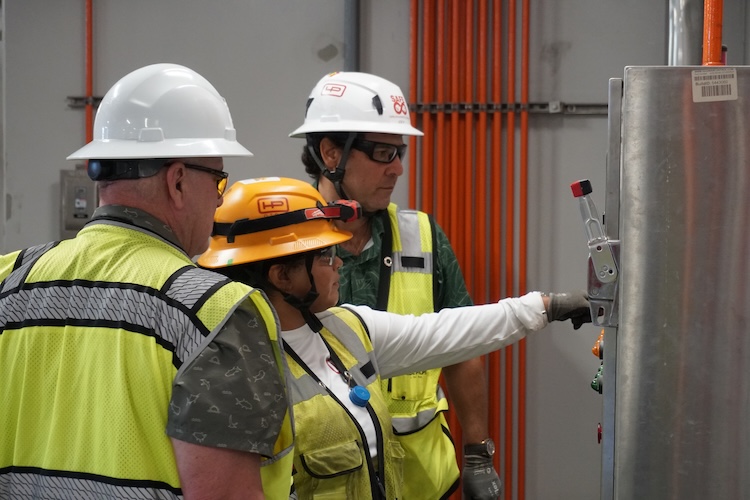
Testing rarely proceeds without challenges. One of the integration manager’s most valuable contributions is leading multidisciplinary troubleshooting throughout start-up and commissioning. When issues arise, they coordinate investigations across design teams, equipment manufacturers, controls programmers, subcontractors, and owner representatives to identify root causes and develop corrective actions.
Every deficiency is documented and tracked through the commissioning action log until it has been verified, tested, and formally closed. Whether the issue involves instrumentation, controls programming, equipment functionality, communications, or process sequencing, the integration manager ensures that no operational concern is overlooked before turnover.
Rather than simply documenting problems, they drive collaborative resolution while maintaining project momentum toward operational readiness.
Long Term Operation
The integration manager’s responsibility does not end when construction is complete. Their objective is to deliver facilities that are fully integrated, fully tested, and fully prepared for long-term operation.
By aligning design intent with construction execution, validating system functionality, coordinating multidisciplinary testing, managing operational transitions, and resolving technical issues before turnover, integration managers help owners receive facilities that operators can confidently place into service immediately.
The Future of Integration Leadership in Water Infrastructure
As collaborative delivery continues to expand across the water sector, owners will increasingly benefit from dedicated operational integration leadership. Tomorrow’s treatment facilities will become even more automated, data driven, and technically sophisticated, increasing the need for professionals who understand not only how facilities are built, but how they must ultimately operate.
For design-build teams, the integration manager is more than a commissioning coordinator—they are the operational integration leader who connects design, construction, technology, and operations into a unified delivery strategy. By maintaining that focus from concept through owner turnover, integration managers help transform project complexity into operational certainty, delivering facilities that perform as intended for decades to come.