
Collaborative delivery continues to gain momentum throughout the water sector, which comes with a growing demand for clear, consistent, easy-to-use contract documents. Recognizing this need, the Water Collaborative Delivery Association (WCDA) launched a major initiative to generate a comprehensive construction management at-risk (CMAR) contract template for water and wastewater utilities. The goal was simple: deliver a practical template built on industry best practices. Over the course of several months, attorneys, owners, and CMAR practitioners collaborated, drafted, and reviewed ideas, metrics, and best practices for the template. The result was WCDA’s 2023 CMAR contract template—a standardized form that aligns with the unique needs of public water utilities implementing a CMAR project.
Now, two years after its release, WCDA is assessing the template’s overall performance in the real world. The WCDA Research Committee recently conducted a survey to gather feedback on what’s working, what could be improved, and how the template is being used in practice. The Contracts Committee’s goal was to use the survey results to increase awareness of the template as well as identify needed updates to the template.
The survey generated more than 40 responses from a cross-section of owners, contractors, engineers, and owner advisors. Overall, the feedback paints an encouraging picture of growing industry adoption and satisfaction with the WCDA CMAR contract template. Respondents highlighted the value of using a standardized document to address CMAR-specific project needs, manage risks effectively, and avoid delays at the project’s start. The sections below summarize key insights and notable trends from the survey results.
Broad Participation and Diverse Experience
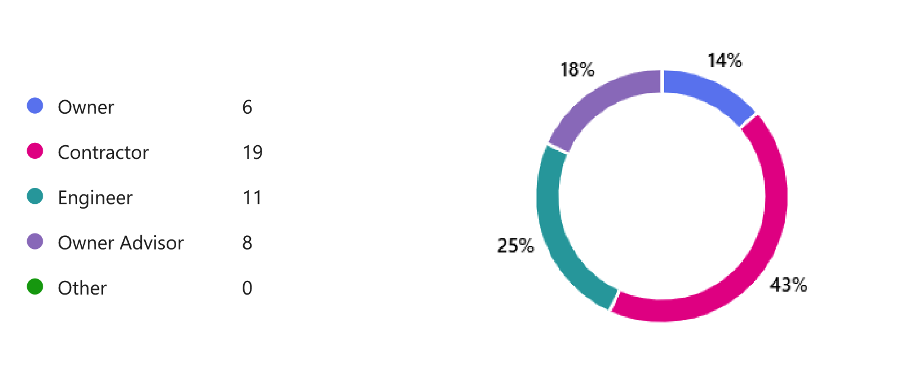
The survey drew responses from a robust mix of sector voices, including 19 contractors, 11 engineers, 8 owner advisors, and 6 owners. This wide distribution brings real-world experiences from each phase of the collaborative delivery process and underscores the contract template’s relevance across project roles.
Versatile Across Project Types and Scale
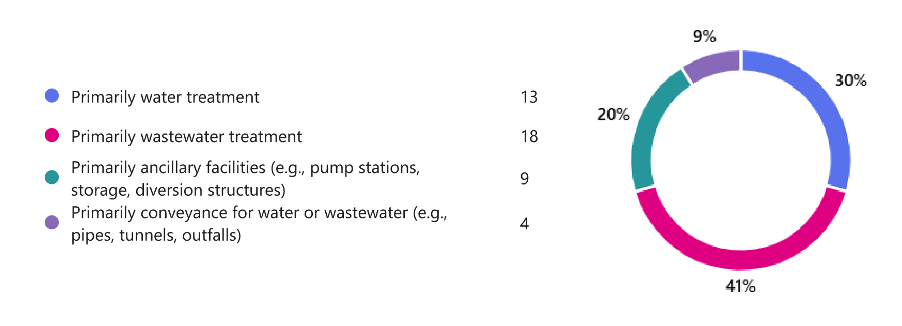
The projects surveyed covered a diverse range of types: water treatment, wastewater treatment, conveyance, and supporting infrastructure. Project sizes varied widely, from $3 million to more than $1 billion, demonstrating the template’s flexibility for both small- and large-scale capital projects.
The template’s growing footprint is also notable. It has now been used in at least 20 US states and internationally in Saskatchewan (Canada), Jakarta (Indonesia), and Panama. This geographic reach reflects its adaptability to various regulatory environments and project conditions.
A Streamlined Path to Contract Execution
A noteworthy finding of the survey is that 63% of respondents reported the time required to execute the WCDA CMAR contract was “about the same” or “shorter” than other contract types. This reinforces the template’s ability to streamline negotiations, minimize administrative hurdles, and help teams transition into project delivery more quickly.
Early Works and Amendments
More than 65% of projects surveyed included early works packages and executed Phase II construction price amendments. Respondents praised the template’s flexibility, highlighting how easy it was to amend the agreement for early work packages and final pricing. This adaptability supports smoother transitions between project phases and helps teams stay responsive to evolving project requirements.
What Users Liked Most
Respondents pointed to several standout strengths of the WCDA CMAR template:
- Clarity and organization
- Fairness and balanced risk allocation
- Recognition of an industry-standard resource
- Ease of use and adaptability
Many users praised the clear and detailed cost provisions, as well as the contract’s ability to serve as a strong foundation for negotiations while still being easily adaptable by individual procurement teams.
Will They Use It Again?
Perhaps the most telling result: 98% of respondents said they would use the WCDA CMAR contract template for future projects. This nearly unanimous endorsement reflects the template’s effectiveness, usability, and value across the industry.
Owner Advisors on the Rise
A notable trend in the water sector is the increasing reliance on owner advisors (OAs). More than 70% of respondents indicated using an OA, whether a program manager, a separately contracted advisor, or as part of the design team. Depending on the scope of the project, this participation of an OA may help with thoughtful CMAR procurement, more balanced decision-making, technical guidance, and additional support throughout the project life cycle. To learn more about the role of an OA you can download our free Guide to Owner Advisors here.
Final Takeaways and What’s Coming
The WCDA CMAR contract template has proven to be a powerful tool for delivering collaborative projects within the water sector. Its clarity, fairness, and adaptability continue to drive successful outcomes for owners, contractors, and engineers. As more organizations adopt and refine the template through real-world use, the industry stands to benefit from greater consistency, efficiency, and shared understanding.
WCDA is already incorporating the survey’s insights into the next revision of the template. Stayed tuned for updates!