On February 13, 2026, a 14-foot-diameter penstock above Yuba Water Agency’s New Colgate Powerhouse in Yuba County ruptured without warning. Hundreds of acre-feet of water tore down the hillside and into the North Yuba River, and the powerhouse went offline. No capital plan survives an event like that unchanged.
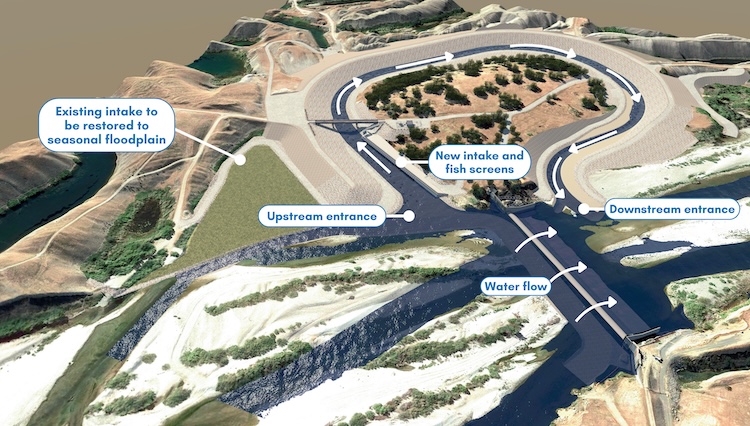
Just 10 days later, proposals were due for one of the largest construction projects Yuba Water had ever been involved in to build the Daguerre Point Nature-Like Fishway, a transformational fish passage project around the US Army Corps of Engineers’ Daguerre Point Dam on the Lower Yuba River. The necessity of this project remained unchanged by the events at the New Colgate Powerhouse, but the financial impacts of the incident put the budget for the project in greater focus.
That is the reality collaborative delivery is built on, even though it rarely gets discussed in those terms. We tend to talk about construction management at-risk (CMAR) and design-build in the context of schedule compression or early contractor input on constructability. What gets less attention is what these methods do for an owner when the ground shifts financially, not just physically.
Think about what a hard-bid contract asks an owner to commit to. Design gets finished, a scope gets locked, a price gets bid, and a contractor is selected—all before a shovel touches dirt. That structure works well when the world holds still. It works poorly when an agency suddenly has to redirect staff, cash, and attention toward an emergency it didn’t anticipate. Reopening a locked scope under hard bid usually means change orders, claims, and a contractor with little incentive to help the owner solve a problem that isn’t technically theirs.
CMAR changes that dynamic before the crisis ever happens. Because the contractor is on board during design—developing a guaranteed maximum price collaboratively rather than bidding a finished design cold—the owner and contractor already have a working relationship and a shared understanding of the project’s cost drivers. When something forces a rethink—a funding gap, a shift in priorities, an unrelated disaster pulling money elsewhere in the organization—that relationship becomes the mechanism for adapting. Sequencing can flex. Packages can be re-scoped or re-phased. Design decisions that haven’t been locked yet can be steered toward what the budget can support instead of being frozen in a bid document that no longer reflects reality.
This matters even more on work with a regulatory clock attached. Projects that could affect state and federally listed species and operate under state and federal permits and work windows don’t get to simply pause when money gets tight; those permit conditions and construction windows are not flexible whether or not the budget is ready. A collaborative delivery structure gives an owner room to renegotiate scope and sequencing with a contractor who is already invested in the outcome, rather than trying to renegotiate a fixed-price contract with a party whose incentives just shifted against them.
None of this is theoretical for the agencies managing expensive and essential water, power, and flood-risk-reduction infrastructure across California (and the nation) right now. Extreme weather, maintenance needs, and unforeseeable infrastructure failures can happen, and the Colgate penstock incident is a visible example of how fast an agency’s financial picture can change. Water agencies are increasingly finding that the flexibility built into collaborative delivery isn’t a nice-to-have; it’s what keeps other capital priorities—in the case of the Nature-Like Fishway: fish passage, listed species recovery, and water supply reliability—moving forward even when the unexpected happens.
The industry has spent years talking about collaborative delivery as a tool for solving technical problems: constructability, geotechnical risk, complex staging. It’s time to talk about it as a financial resilience tool too. Agencies betting their capital programs on hard bid are also betting that nothing unplanned will happen for the life of the contract. Given what infrastructure owners across the water sector are dealing with lately, that is an increasingly risky bet to make. Collaborative delivery does not prevent disasters. What it does is give owners and contractors greater flexibility when disaster hits something adjacent to the project instead of forcing everyone back to the negotiating table from a standing start.